- Hot topics
- #RISK Awards

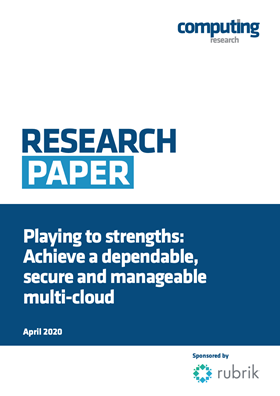
Achieve a dependable, secure and manageable multi-cloud

In the majority of organisations, the question of whether to embrace public cloud computing was never a simple choice between that and on-premises infrastructure.
In the majority of organisations, the question of whether to embrace public cloud computing was never a simple choice between that and on-premises infrastructure.
Most businesses combine the two. Workloads differ, as do the needs of users. Not every application has to be delivered with sub millisecond latency. Some really do.
This is why leading organisations evaluate workloads to establish the need for performance, latency, elasticity, and so on. They take a best-of-breed approach and evaluate performance factors to shift workloads between multiple public clouds and/or on-premises, perhaps via an edge gateway.
Computing surveyed approximately 200 business decision makers, representing organisations from a wide variety of industries, including, banking and nance, logistics, manufacturing, retail and the government sector to gain a detailed picture of the challenges of running a multi-cloud environment.
Our objectives were to explore attitudes and experiences around hybrid and multi-cloud strategy, identify where businesses are placing different types of workload and establish the factors influencing these decisions. The research also throws light on some unforeseen consequences and challenges arising from multi-cloud and hybrid infrastructure in terms of its complexity and impact on data visibility.
This is premium content
If you are already a registered user or subscriber you can SIGN IN now
Register today for free!
Want to read more before deciding on a subscription? It only takes a minute to sign up for a free account and you’ll get to enjoy:
- More free content each month
- Full access to our news archive
- Daily news alerts and updates
- Bookmarks and commenting
Get more free content sign up today
Ready to subscribe? Choose from one of our subscription packages for unlimited access!