



As the global AI race accelerates, trust — not compute — is emerging as the true source of competitive advantage. In this article, Renato Leite Monteiro argues that accountability is no longer a compliance exercise but a strategic enabler of speed, confidence and value creation, a theme that sits at the heart of the #RISK Executive Forums as leaders grapple with how governance, innovation and resilience must evolve together in 2026 and beyond.
Accountability will be the competitive differentiator that decides the global AI race in 2026
The next five years will separate winners from losers in the global AI race. Not based on who has the most compute or the biggest models. Based on who can deploy powerful AI safely enough that people and organizations actually trust it.
The regions that figure this out will capture the talent, the companies, and the economic value. The rest will watch from the sidelines wondering what happened.
Here’s what most organisations still get wrong: they treat accountability like a brake on innovation. Like something that slows you down. But the data tells a different story.
Modified risk tolerance
Organisations with robust accountability frameworks don’t become more cautious. They become more confident. Management and internal stakeholders who actually understand the risk governance and how to address risks become less risk averse because they understand the parameters.
They move from “we can’t do that” to “here’s how we do that responsibly.” They use data more effectively, more responsibly, and for purposes they previously considered out of scope entirely.
Faster pace of innovation
Accountability doesn’t slow you down. It speeds you up. Companies with rigorous privacy and AI programs move faster than companies without them. The program provides the roadmap. It creates standardised processes, tools, and rules that enable agility.
While competitors debate whether something’s allowed, accountable organisations are deploying. While others guess at regulatory interpretation, they have clear specifications. While some hope regulators won’t notice, they’re demonstrating what they built.
Strategic bandwidth
Real accountability lets organisations stop thinking about pure compliance and start thinking about solving actual problems. Using data to ensure safety and efficiency. To arrive at fair pricing. To deliver excellence and high standards of service.
This is the shift from defensive to strategic. From “how do we avoid trouble” to “how do we create value.” From legal department bottleneck to competitive weapon.

Why the GCC can win this
After working across this region for a year, I’ve seen three distinct advantages.
Greenfield opportunity. The GCC has less legacy technical debt than Silicon Valley or Europe. Newer infrastructure means you can build privacy and AI protection into the foundation rather than bolting it on later.
Execution capability. The GCC has already proven it can build things fast. Some of the world’s most efficient government services. Business licensing, visa processing, company formation faster and simpler than almost anywhere else.
Economic incentive. The GCC’s economic future depends on being trusted with data and safe AI. Financial services, healthcare, smart cities, AI services, they all require people to share deeply sensitive data. The regions that protect that data best will win the long-term economic competition. The region that has widespread safe and accountable AI will do more business and develop its economy with far fewer setbacks.
Apply the same thinking
The GCC knows how to make complex processes agile and efficient. Now apply that same thinking to privacy and AI regulation and accountability frameworks. Make the documentation lightweight but meaningful. Make the regulatory approach risk-based and responsive. Make compliance efficient but real. Make regulatory interpretations accurate, and not far fetched. A UAE regulator captured this perfectly: “Innovation slows not because the bar is high, but because the bar is not visible.”
This isn’t about choosing between powerful AI and protective AI. It’s about understanding that protective AI—built on real accountability—is precisely what enables you to deploy powerful AI at scale.
The timing matters
This year, the DIFC will host the Global Privacy Assembly. Every major privacy and AI authority in the world will be in one room. This is the moment to demonstrate concrete action. To show what efficient, meaningful accountability actually looks like.
Not compliance theater. Not ethics principles documents gathering dust. Actual systems that prove you can move fast while protecting people. That innovation velocity and trust aren’t trade-offs.
The world is watching not just the AI race but who can build technology that’s both powerful and protective. Who can compete globally while safeguarding rights and providing legal certainty to organisations. Who can demonstrate that speed and safety aren’t opposites.
The GCC has the capital, the ambition, and the proven execution capability. The question for 2026 is whether the region will demonstrate this before others figure it out.
The organisations and regions that understand accountability enables velocity will capture the future. The ones still treating it as bureaucratic burden will watch that future happen somewhere else.
The opportunity is clear. The advantages are measurable. The timing is now.

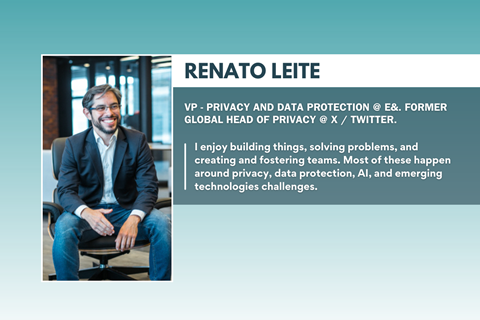
Renato Leite, VP - Privacy and Data Protection @ e&. Former Global Head of Privacy @ X / Twitter.
I enjoy building things, solving problems, and creating and fostering teams. Most of these happen around privacy, data protection, AI, and emerging technologies challenges.







19 Readers' comments